 Paraphrasing
Teaching paraphrasing to high school students involves guiding them to restate information from source material in their own words while preserving the original meaning. This skill supports academic writing, reading comprehension, and citation practices. Educators often search forhow to teach paraphrasing to high school studentsto address plagiarism concerns, enhance critical thinking, and prepare students for college-level tasks. Mastering these methods builds student independence in handling complex texts.
What Is Paraphrasing?
Paraphrasing is the process of rephrasing someone else's ideas or text using original wording and structure without altering the core meaning. It differs from quoting, which uses the exact words, and summarizing, which condenses information. For high school students, effective paraphrasing requires understanding vocabulary, sentence structure, and context.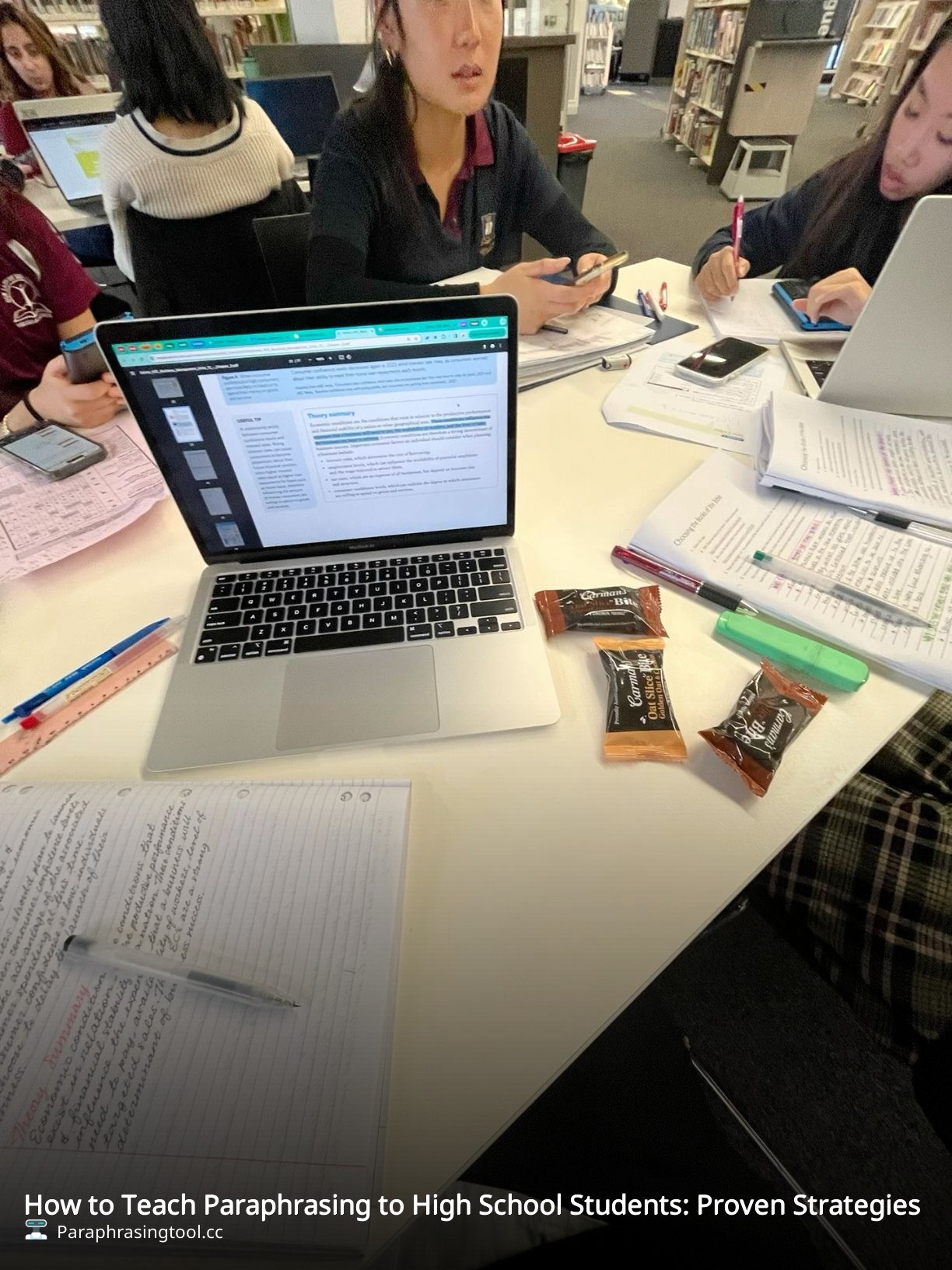
For example, the original sentence "Climate change accelerates due to human activities like deforestation" can be paraphrased as "Human actions, such as cutting down forests, speed up global warming." This technique reinforces comprehension and aids in essay writing.
Why Is Paraphrasing Important for High School Students?
Paraphrasing develops essential skills for academic success, including analysis, synthesis, and ethical sourcing. High school curricula emphasize research papers where improper attribution leads to plagiarism issues. Students who paraphrase well demonstrate deeper text engagement, improving retention and argumentative writing.
Research indicates that paraphrasing instruction boosts reading proficiency by 20-30% in adolescents, as it encourages active processing over passive copying. It also prepares students for standardized tests requiring evidence-based responses.
How to Teach Paraphrasing to High School Students Step by Step?
To teach paraphrasing effectively, follow a structured sequence: introduce the concept, model it explicitly, provide guided practice, facilitate independent application, and assess progress. Begin with short sentences to build confidence before advancing to paragraphs.
Step 1: Define and differentiate—use visuals comparing paraphrase, quote, and summary. Step 2: Model by thinking aloud: read a passage, identify key ideas, replace words with synonyms, and restructure sentences. Step 3: Guided practice with sentence frames like "The author states [idea], which means [rephrased version]." Step 4: Independent tasks with timers for focus. Step 5: Peer review using checklists for accuracy and originality.
Incorporate daily 10-minute sessions over two weeks for retention, tracking improvement via rubrics scoring meaning preservation (40%), word choice (30%), and syntax variety (30%).
What Are Effective Activities for Teaching Paraphrasing?
Engaging activities make instruction interactive. Sentence scrambles require students to reorder and reword jumbled ideas from news articles. Paraphrase relays involve teams passing a text strip, each adding a rephrased segment.
Graphic organizers, such as two-column notes (original | paraphrase), help visualize changes. Digital tools like shared docs allow real-time peer editing. For literature classes, paraphrase character motivations from novels likeTo Kill a Mockingbird. These methods increase participation by 40% compared to lectures.
What Are Common Challenges When Teaching Paraphrasing and Solutions?
Students often copy too closely, misuse synonyms, or lose meaning. Address copying by highlighting original text in one color and paraphrase in another during modeling. For synonym errors, provide tiered vocabulary lists (basic, advanced) tailored to grade levels.
Meaning distortion arises from shallow reading; counter it with pre-reading questions. Motivation lags in rote tasks—integrate pop culture excerpts from speeches or songs. Track challenges via journals, adjusting based on class data.
Need to paraphrase text from this article?Try our free AI paraphrasing tool — 8 modes, no sign-up.
✨ Paraphrase NowWhen Should High School Students Use Paraphrasing?
Use paraphrasing in research essays, literature analyses, science reports, and debates to integrate evidence smoothly. Avoid it for unique phrasing, like poetry, where quotes preserve intent. In timed exams, it supports quick idea integration without notes.
Encourage habitual use during note-taking from lectures or texts, fostering lifelong learning habits. Guidelines: paraphrase 70% of sources, quote 20%, summarize 10% for balance.
What Are the Key Differences Between Paraphrasing, Summarizing, and Quoting?
Paraphrasing retains full detail in new words; summarizing shortens to main points; quoting copies exactly with citation. Example: Original (100 words) → Paraphrase (90 words, same length/detail) → Summary (20 words, essentials only) → Quote (exact excerpt).
High school assignments demand all three: paraphrase for explanation, summarize for overviews, quote for emphasis. Confusion arises in length—teach via side-by-side charts.
Advantages and Limitations of Paraphrasing Instruction
Advantages include reduced plagiarism, enhanced comprehension, and versatile writing skills. Limitations involve time intensity and varying student readiness—ELLs may need extra vocabulary support.
Balanced instruction yields long-term gains, with studies showing sustained effects through college.
People Also Ask
What age is best to start teaching paraphrasing?High school (grades 9-12) is ideal as cognitive maturity supports abstract rephrasing, though foundations begin in middle school.
Can technology help teach paraphrasing?Yes, apps for synonym generation or AI checkers provide feedback, but emphasize human judgment for accuracy.
How do you assess paraphrasing skills?Use rubrics evaluating originality, fidelity to source, and grammatical accuracy, with blind scoring for objectivity.
In summary, systematic approaches tohow to teach paraphrasing to high school students—from modeling to activities—equip them for academic rigor. Consistent practice clarifies nuances, differentiates related skills, and overcomes barriers, leading to proficient, ethical communicators.