 Paraphrasing
In academic writing, the question"is paraphrasing okay in research papers"arises frequently among students and researchers. Paraphrasing involves rephrasing someone else's ideas in your own words while retaining the original meaning. This technique is widely accepted, but only when done correctly with proper attribution. People search for this topic to understand ethical boundaries, avoid plagiarism accusations, and improve their scholarly communication skills. Mastering paraphrasing ensures originality and integrity in research, aligning with academic standards upheld by institutions worldwide.
What Is Paraphrasing in Research Papers?
Paraphrasing in research papers means expressing an author's ideas using different words and structure, without altering the core message. It differs from direct quoting, which copies text verbatim within quotation marks. For instance, an original sentence like "Climate change accelerates biodiversity loss" could be paraphrased as "Global warming hastens the decline of species diversity." This method integrates external sources smoothly into your analysis.
Researchers use paraphrasing to demonstrate comprehension and synthesize information from multiple sources. It allows for a cohesive narrative in papers, avoiding over-reliance on quotes. However, the original source must always be cited to credit the author, maintaining scholarly honesty.
Is Paraphrasing Okay in Research Papers?
Yes, paraphrasing is okay in research papers as long as it is accompanied by a proper citation. Academic guidelines from styles like APA, MLA, and Chicago explicitly permit and encourage it as a way to incorporate evidence ethically. Without citation, even reworded content constitutes plagiarism, which can lead to severe consequences such as failing grades or academic penalties.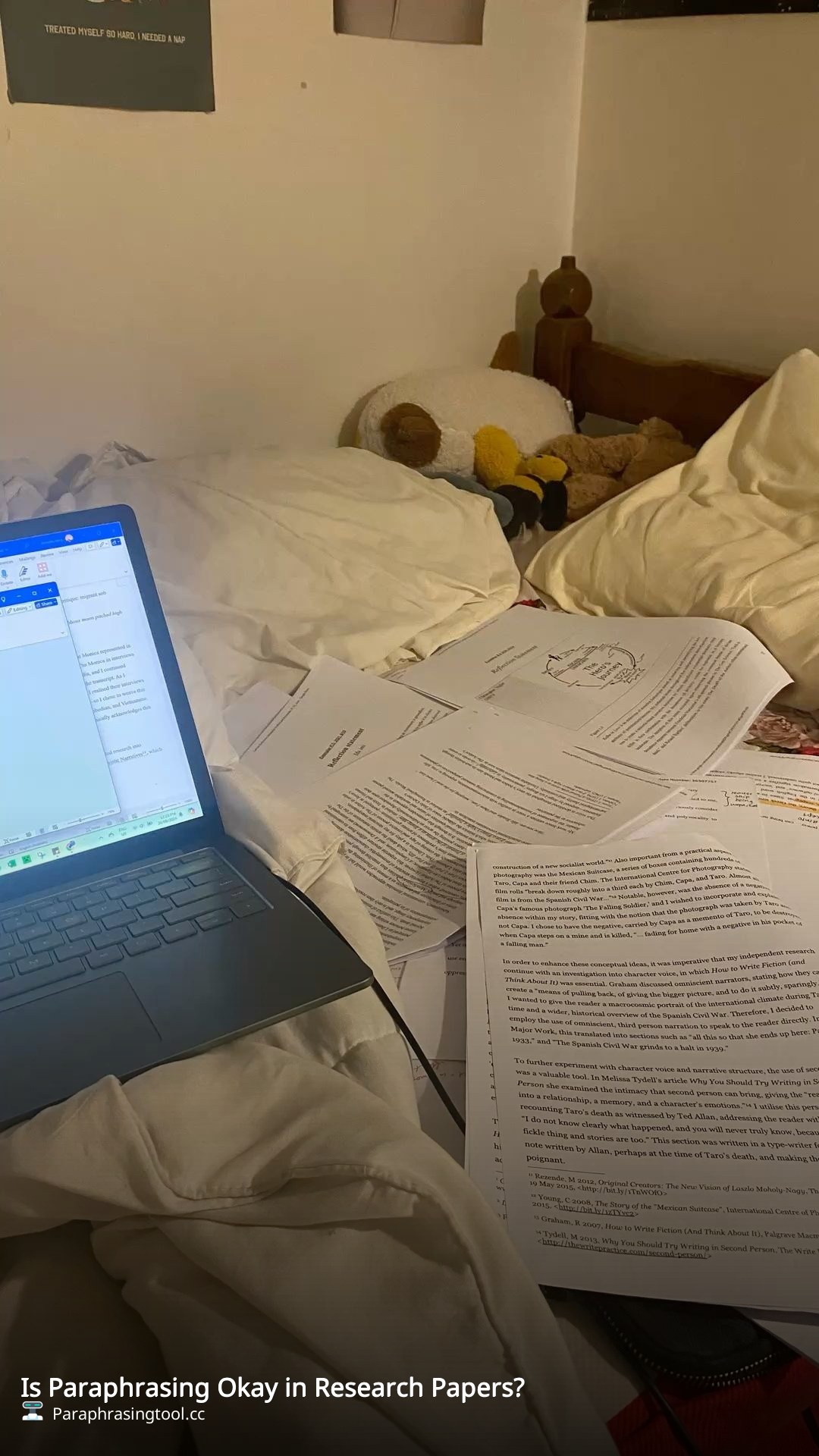
The key is transformation: simply swapping synonyms is insufficient. Effective paraphrasing requires deep understanding and restructuring. Journals and professors value this skill because it shows critical engagement with the literature rather than rote copying.
How Does Proper Paraphrasing Work?
Proper paraphrasing starts with reading the source material thoroughly until you grasp its essence. Then, close the source and rewrite the idea from memory in your own voice. Compare your version to the original to ensure accuracy and sufficient change. Finally, add an in-text citation and a full reference.
Example: Original (Smith, 2020): "Urbanization fragments habitats, threatening wildlife." Paraphrased: "The expansion of cities breaks up natural environments, endangering animal populations (Smith, 2020)." Tools like plagiarism checkers can verify originality, but they are supplements to careful manual effort.
This process preserves the source's intent while showcasing your analytical abilities, a hallmark of strong research writing.
Why Is Paraphrasing Important in Academic Work?
Paraphrasing enhances readability and flow in research papers by blending sources into your argument seamlessly. It reduces quotation overload, which can make text feel patchwork. Additionally, it builds evidence-based claims without disrupting your voice.
From an ethical standpoint, it respects intellectual property while advancing knowledge. Institutions emphasize it in writing guides to foster original thought. In fields like sciences and humanities, paraphrasing supports literature reviews and discussions effectively.
What Are the Key Differences Between Paraphrasing, Quoting, and Summarizing?
Paraphrasing rewords a specific passage at similar length; quoting reproduces exact words; summarizing condenses broader ideas into fewer words. Use paraphrasing for detailed integration, quotes for impactful phrasing or definitions, and summaries for overviews.
Table for clarity:
- Paraphrasing: Same detail level, own words, citation required.
- Quoting: Exact text, quotation marks, page number often needed.
- Summarizing: Shorter version of main points, citation required.
Understanding these distinctions prevents misuse and strengthens paper structure.
Need to paraphrase text from this article?Try our free AI paraphrasing tool — 8 modes, no sign-up.
✨ Paraphrase NowWhen Should Paraphrasing Be Used in Research Papers?
Use paraphrasing when the source's idea is central but its wording is not unique or poetic. It suits explanations, background context, or supporting arguments in methodology or results sections. Avoid it for legal texts, statistics, or distinctive prose better served by quotes.
In literature reviews, paraphrasing predominates to synthesize studies. During revisions, balance it with quotes to maintain variety—aim for no more than 10-20% direct quotes in most papers.
Common Misunderstandings About Paraphrasing
A frequent error is assuming synonym replacement equals paraphrasing; it often retains the original structure, flagging as plagiarism. Another myth: no citation needed if fully reworded. Always cite ideas, not just words.
Students sometimes over-paraphrase, diluting meaning. Test by having peers read without the source—they should recognize the idea's origin through your citation, not mimicry. Faculty training highlights these pitfalls in workshops.
Advantages and Limitations of Paraphrasing
Advantages include improved originality scores, better synthesis, and concise expression. It demonstrates mastery, appealing to peer reviewers. Limitations: time-intensive and risk of unintentional misrepresentation if source is misunderstood.
Mitigate limitations by multiple readings and peer feedback. In collaborative research, consistent paraphrasing ensures uniform style.
Best Practices for Citing Paraphrased Material
Follow your style guide: APA uses author-date (Author, Year); MLA parenthetical (Author page). Include page numbers if precise location matters. Reference lists provide full details.
Practice with software like EndNote for accuracy. Consistency across the paper upholds professionalism and eases verification.
To conclude, paraphrasing is not only okay but essential in research papers when executed with citation and care. It upholds academic integrity, enhances argumentation, and reflects scholarly depth. Researchers who prioritize accurate rephrasing contribute meaningfully to their fields while avoiding ethical breaches. Regular practice refines this skill over time.
People Also Ask
Does paraphrasing require citation?Yes, every paraphrase needs a citation to attribute the original idea, distinguishing it from your own contributions and preventing plagiarism.
Can you paraphrase your own previous work?Generally yes, through self-plagiarism policies vary; cite prior publications to maintain transparency, especially in theses or journals.
What percentage of paraphrasing is acceptable in a research paper?No strict limit exists, but aim for originality—paraphrase extensively with citations while ensuring 70-80% of content reflects your analysis and data.