 Paraphrasing
A photo essay assignment in high school involves students creating a visual narrative through a series of photographs, often accompanied by captions or text. These projects combine photography skills with storytelling to explore themes like community life, personal growth, or social issues. Educators and students search forphoto essay assignment high school examplesto gain inspiration, understand structure, and meet assignment requirements effectively. This approach fosters creativity while developing visual literacy, making it a valuable tool in high school curricula.
What Is a Photo Essay Assignment in High School?
A photo essay assignment requires high school students to produce a cohesive set of images that convey a specific story or message. Typically, it includes 8 to 20 photographs sequenced to build a narrative arc, with minimal text such as titles, captions, or introductory paragraphs. The goal is to communicate ideas visually rather than relying solely on words.
These assignments emphasize composition, lighting, and subject selection. Students select a theme, capture relevant images, and arrange them logically. For instance, a common theme might document a local event, allowing learners to practice ethical photography and narrative development. High school versions adapt professional photo essays to educational levels, focusing on accessible equipment like smartphones.
How Do Photo Essay Assignment High School Examples Work?
Photo essay assignment high school examples function as models that demonstrate narrative flow, image selection, and thematic coherence. They start with an establishing shot to set the scene, followed by detail-oriented images that develop the story, and conclude with a reflective or impactful final image. Captions provide context without overwhelming the visuals.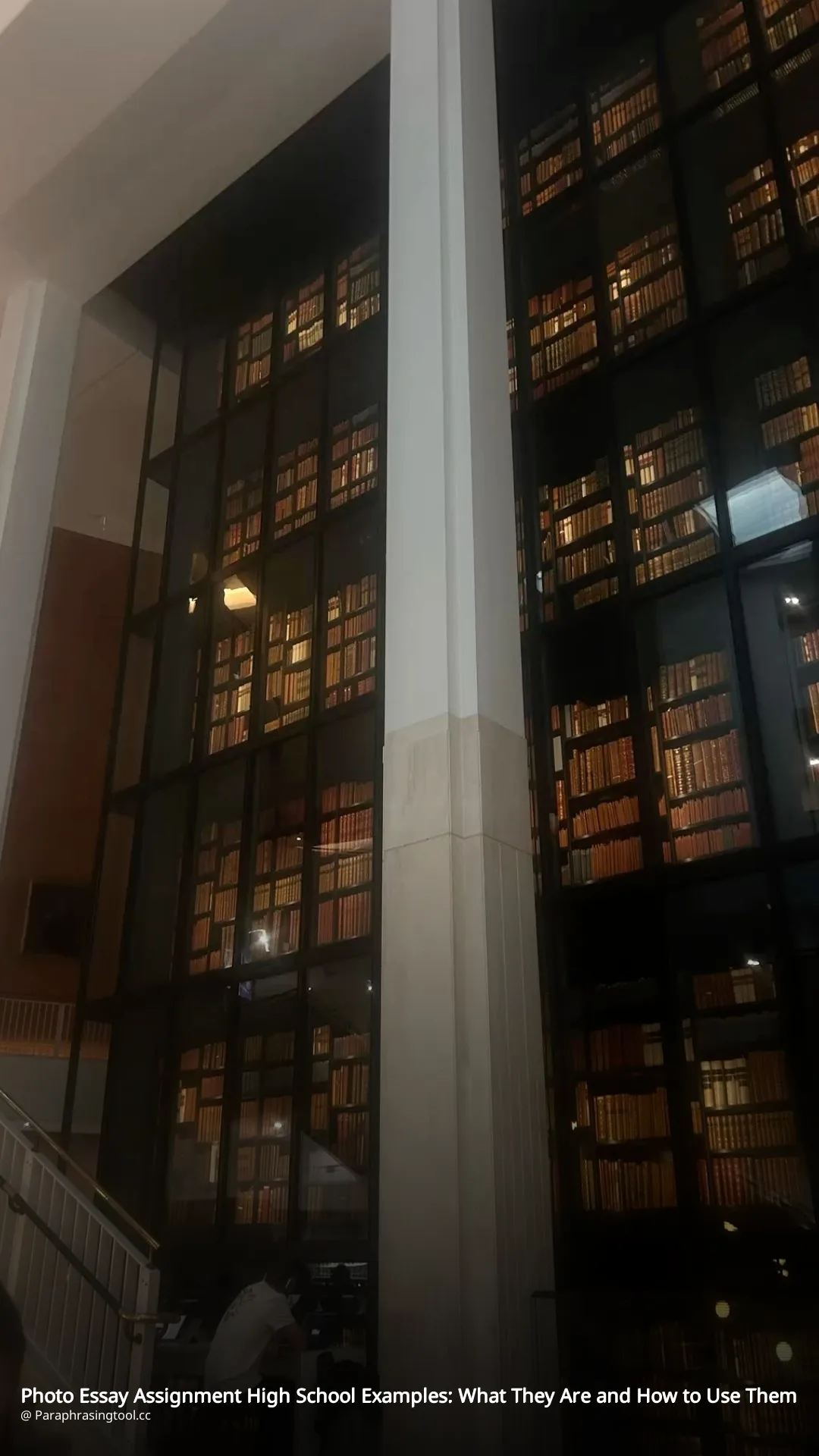
In practice, an example might explore "A Day in the Life of a High School Athlete." Initial photos show preparation, mid-sequence captures training intensity, and closing shots highlight teamwork or exhaustion. Students analyze these examples to identify techniques like rule of thirds for composition or leading lines for guiding the viewer's eye. This breakdown helps replicate effective structures in original work.
Why Are Photo Essay Assignments Important for High School Students?
Photo essay assignments build critical skills such as observation, empathy, and communication. They encourage students to engage deeply with their surroundings, promoting awareness of social dynamics and personal perspectives. Visually driven projects also appeal to diverse learning styles, aiding those who struggle with traditional writing.
From an educational standpoint, these tasks integrate art, journalism, and language arts standards. They teach media literacy by requiring analysis of visual rhetoric and ethical considerations like consent for portraits. Long-term, they prepare students for real-world applications in fields like graphic design or documentary filmmaking.
What Are Common Photo Essay Assignment High School Examples?
Typical examples include themes like urban decay, family traditions, environmental changes, or school diversity. One standard model documents a community's response to a seasonal festival, using wide shots for crowds, close-ups for emotions, and sequences showing progression from setup to cleanup.
Another frequent example portrays "The Immigrant Experience," featuring portraits of families, symbolic objects like passports, and neighborhood scenes. Thesephoto essay assignment high school examplesillustrate how to balance personal narratives with broader social commentary, often limited to 10-15 images for manageability.
School-specific ideas cover cafeteria culture, library routines, or sports team dynamics, providing relatable subjects that require minimal travel.
How to Structure a High School Photo Essay Assignment?
Begin with a clear theme and storyboard outlining 10-15 shots. Capture images in varied conditions to ensure diversity in angles and lighting. Edit for consistency in color tone and crop for focus, then sequence digitally or in print.
Accompany visuals with concise captions—20-50 words each—explaining context or emotion. An effective structure follows: introduction (1-2 shots), rising action (majority), climax (peak moment), and resolution (1-2 concluding images). Test the flow by presenting to peers for feedback on narrative clarity.
What Are Key Differences Between Photo Essays and Traditional Essays?
Photo essays prioritize visuals as the primary storytelling medium, with text in support, whereas traditional essays rely on prose for arguments. Photo versions demand technical skills like exposure control, while written essays focus on research and rhetoric.
Need to paraphrase text from this article?Try our free AI paraphrasing tool — 8 modes, no sign-up.
✨ Paraphrase NowNarrative pace differs: photos convey ideas instantly, requiring precise sequencing, compared to the linear progression of paragraphs. High school photo essays often limit scope to observable phenomena, avoiding abstract topics suited to essays. This visual emphasis enhances engagement but challenges students to imply rather than state explicitly.
When Should Photo Essay Assignments Be Used in High School?
Implement them in photography, English, or social studies classes during units on narrative techniques or current events. They suit mid-semester projects allowing 2-4 weeks for execution, accommodating field work and editing.
Ideal for interdisciplinary approaches, such as pairing with history to document local heritage sites. Avoid during high-stakes testing periods due to time demands. They work best for grades 9-12, where students possess basic camera proficiency.
Common Misunderstandings About Photo Essay Assignments
A frequent error views them as random photo collections rather than sequenced stories; strong examples maintain a unified theme throughout. Another misconception is over-relying on text, diluting visual impact—captions should enhance, not explain everything.
Students often neglect ethics, like obtaining subject permissions, or technical basics like steady shots. Examples clarify that professional polish isn't required; authenticity trumps perfection in educational contexts.
Advantages and Limitations of Photo Essay Assignments
Advantages include fostering creativity, improving digital literacy, and making abstract concepts tangible through visuals. They accommodate varying skill levels and encourage outdoor engagement.
Limitations involve access to equipment, weather dependencies for outdoor shoots, and subjective grading criteria. Not all themes yield equally strong visuals, and privacy concerns can complicate portraits.
People Also Ask
What makes a good high school photo essay?A strong one features a compelling theme, coherent sequencing, high-quality images with varied compositions, and succinct captions that add depth without redundancy.
How many photos are needed for a high school photo essay?Most assignments specify 10-20 images, balancing depth with brevity to maintain viewer interest.
Can smartphones be used for photo essays?Yes, modern smartphones offer sufficient quality; focus on lighting, framing, and editing apps ensures professional results.
In summary, photo essay assignment high school examples provide blueprints for visual storytelling that enhance student skills in observation and narrative construction. By studying structures, themes, and techniques from these models, educators and learners can produce impactful projects that blend art with education effectively.